ahh the life (expectancy)
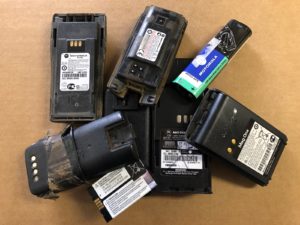
2-way radio batteriesSigns of a bad, defective, or aged battery include constant or intermittent static, a shorter work day, and intermittent or poor transmit. Transmit problems are an early indicator of a old or bad battery. It is simple, it takes more energy to transmit than to receive. So if you have a radio that receives perfectly, but is iffy on transmit, check your battery.

So then the question arises… What happens if I continue to use the old battery? Just like any home appliance operating on low voltage, your radio will eventually have failures associated with the brown out. Then the simple need for a replacement battery turns into a battery + radio repair. As you can see, it would be much cheaper and wiser to replace the old battery when needed.Motorola battery date code
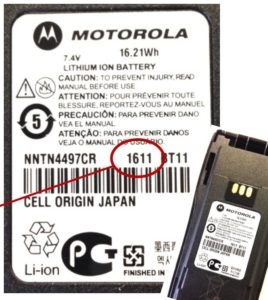
How do you know the age of a battery?

On Motorola brand batteries you will find either a 3-digit code or 4-digit code on the label of the battery or embossed in the plastic of the battery itself.  (See above photo for an example.) The first number on the 3-digit code represent the year of manufacture, the next two numbers are the week of the year. Example: 611 would be 2016 (or heaven-forbid 2006) the 11th week of the year. The newer 4-digit date codes are easier, 1611 would be 2016, the 11th week.

If you have difficulty determining the age of a battery, give us a call here at Delmmar Communications, 800-872-2627. We are always happy to help.

construction grade radio

CP200 and CP150 portable radios

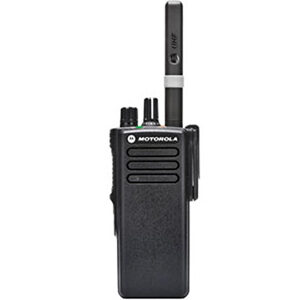
Hardworking, durable, tough, will take a drop, these are all phrases we hear when people are talking about the CP200. It is the best choice in the mid-tier of Motorola radios. It is an all around construction grade radio. It is the replacement radio for the SP50, P110 and P1225 radios in the former Radius Division, now Commercial Series for Motorola. It durable 40-hour a week working radio, has a full two year factory warranty, and comes equipped with both a long-life Li-Ion Battery and a Fast Rate Desktop Charger.

Flat rate radio repair is available for the CP200 after it is out of warranty. Includes parts, labor and return shipping.

Note: The CP200 radio has been replaced by the CP200d, which is available in digital or analog only models.

If you have questions give us a call here at Delmmar Communications, 800-872-2627. We are happy to help.

special modifications


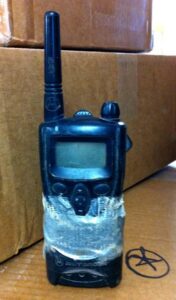
Occasionally radios arrive at our Motorola CP100 with duct taperepair facility with some unique modifications. These two CP100 UHF radios arrived together from one of our very favorite nursery companies. They were just so special we thought we’d take a picture or two and blog about them.

The first radio is a classic example of a radio with poor transmit and receive, caused inadvertently by the user. Both the microphone hole and the speaker grill are covered by duct tape. We can see the reason for the duct tape engineering, the carryholder was broken, and the user wanted the radio to stay in the carryholder. However, in doing so, they blocked the transmit and receive of the radio. Radio lesson: Be watchful when applying tape or stickers to the front of a radio. You might be covering up something you will need.

Motorola CP100 with sharpie antennaThe second one had lost its antenna covering and the user had fashioned a Sharpie pen cartridge to cover the coil. Now while this might be all the rage in the Sharpie fashion world, it is a very temporary fix for the problem. This radio would begin to lose range due to the coil being exposed to the outside elements. Little by little the coil would oxidize and/or corrode, until the radio’s transmit and receive would be shortened dramatically. So if you need to do this for a day or two, great, but then follow it up by getting the radio to the repair repair center and a new antenna installed. 2022 note: Replacement parts are no longer available for the original CP100 radio. Check with us for availability of batteries, chargers, and carryholders.

If you have questions about radios or radio repair give us a call here at Delmmar Communications, 800-872-2627. We are always happy to help.
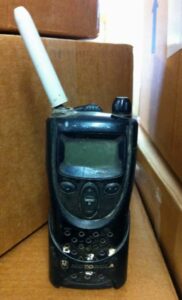

2022 note: Replacement parts are no longer available for the original CP100 radio. Check with us for availability of batteries, chargers, and carryholders.

The replacement radio for this model would be the CP100d, CP185 or BPR40d.

2-way radios vs cellphones

Cellphone vs Radio

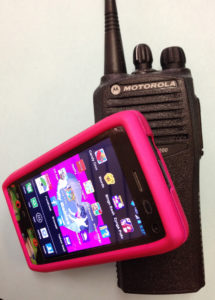
Non-radio users often ask why would someone use a radio instead of a cellphone. Here a few answers:

1) When you need immediate ability to communicate on-site to one or many at the press of a button. Two-way radios are the most reliable method.

2) No monthly bill. No minutes. (unless you connect your radios with a trunking tower system)

3) Durability. Business radios are designed to go a 40-hour work week. Many are rated for resistance to moisture, dust, and humidity. They are made to be a workhorse.

4) Using handheld radios for on-site communications can keep workers on task, and prevent the abuses seen with cellphones. (No calling home or surfing the web on a 2-way radio.)

5) Longer life expectancy. Most cellphones last 2-3 years at best. Business two-way radios typically last 5-7 years, or even longer if you have them serviced as needed.

2-way radio board6) Business radios are usually repairable at the radio repair center for less than half the cost of a new radio, while cellphones usually require replacement.

These are just a few thoughts to ponder.

There are situations where cellphones are ideal. But in the situation of public safety, business or on-site communications, radios still give you the best all around solution.

If you have questions give us a call here at Delmmar Communications, 800-872-2627. We are always happy to help.
more tips on better range

2-Way Radio CustomerHere at the radio repair center we get many questions about radio range (talk distance). Typically a handheld business radio will do 2 miles line-of-sight or as far as the radio can see. Several factors interfere with range, including but not limited to: curvature of the Earth, obstacles, height and placement of antenna, position of the radio, and using the correct antenna for the radio.
Range tips:

  • 1) Holding the radio upright with the antenna straight up gives you the best range. Tilting to the side, as if talking on the phone, will reduce the range by up to 2/3s. This will cause transmissions to drop out, or be very staticky. Just remember: Perpendicular to the ground is best!
  • 2) The body fluid of the person wearing the radio can absorb part of the range.  If you’re a little bit round in the middle, your radio will not work as well as your pencil-thin co-worker. You can compensate by wearing the radio higher your body. Maybe in a shirt pocket or with a chest pouch. Height and placement of antenna determines range.
  • 3) Use a good quality fully charged battery. It takes more energy to transmit than to receive. Using a good battery will do wonders to clear up static, making your transmissions clear.
  • 4) Use the appropriate antenna for your radio. While stubby (short) antennas may be available for your radio model, keep in mind these will significantly reduce range. If you are working in a close proximity, they may work wonderfully. However, if you are expecting to transmit a long distance, go back to the original standard length antenna.
  • 5) Check your antenna for damage. If you can bend the antenna and see the coils or if the top cap is gone, it is time to replace the antenna. This may do wonders for your range.
  • 6) Get your radio tuned up. Electronic components inside your radio age over time and the radio will not function as well as it did new. Getting your radio tuned and realigned will bring it back to factory spec, or as close as one can get with an older radio.

If you have questions about increasing range, give us a call here at Delmmar Communications, 800-872-2627. We are always happy to help.
radio range

Radio Repair CenterHere at the radio repair center we occasionally get questions about the range of a 2-way radio. Below are some simple answers to basic two-way radio range questions:

Portable radios generally will talk radio-to-radio, line-of-sight up to 2 miles. Once you start putting obstacles between the radios you will shorten your range. Even the body fluid of the person wearing the radio on their hip will absorb some of the range. Higher wattage radios will have a slight increase in range and a significant increase in clarity of transmission on the outer fringes of your range.

Mobile radios, such as those mounted in vehicles, will generally talk “radio-to-radio” 8-10 miles depending upon the obstacles and the terrain.

Base stations will generally talk approx. 8-12 miles. (referencing a simple base station where you use a mobile radio, power supply and outside antenna, aka a control station.)Contrary to popular belief wattage does not determine distance. Antenna height and placement determines distance.

  • Increasing Range:
  • 1) Hold your radio perpendicular to the ground, not slanted like you would hold a phone. This problem alone could decrease your range 30-50%.
  • 2) Don’t shout CB-style, shouting reduces talk-range on industrial-type radios.
  • 3) Be certain you are using a good, fully-charged battery.
  • 4) Check your antenna. Any exposed copper coil or weather checks which expose the coil when bending are a sign your antenna needs replaced. Also, keep in mind, use of a stubby antenna will reduce your range. The best antenna for a radio is generally the standard antenna it came with.
  • 5) And the technicians in the shop will tell you… have your radios serviced every two-three years to maintain peak performance.

Looking for even more range?

You might be in the market for a repeater, or have need to connect with a local repeater or trunking system which is already in place. But first, try bringing your radios to optimum range by following the above tips.

If you have more questions about increasing range give us a call here at Delmmar Communications, 800-872-2627. We are always happy to help.

fishing license…

Motorola DTR700Here in the Midwest it is the time of year to renew our annual fishing permits. Just finished doing one online today.  (A new modern convenience.) Getting the permit made me think about how many things we do which require a license or permit… fishing, hunting, driving… and two-way radio transmitting. If you use a two-way radio, chances are you need to have an FCC license. While there are a few license-free frequencies in the USA, most businesses using radios need a license.

Radio users who were affected by the FCC narrowband mandate needed to be have a license modification done in order to keep their existing frequencies, and add the narrowband version of their frequency to their existing license. You can do this yourself at the www,FCC.gov website OR you can use a licensing company to take the headache out of the process. Either way, we suggest you don’t procrastinate, as the process will likely bog down as we get closer to the deadline and droves of radio users try to slip under the wire. Be an early adopter of the change. You won’t regret it.

LICENSE-FREE:

There are 5 license-free VHF frequencies known under the nickname MURS (multi use radio service).  Some users are opting to move over to one of these frequencies. While this will work for some VHF users, this will not work for those of you on UHF.

Also in the license-free arena are the 900 MHz radios such as the DTR700.  These new radios are digital, have much clearer transmissions, and more range than a VHF or UHF radio. If you are looking to replace your radios, this would be a great direction to go. The DTR700 can even do simple test messaging. We’re really impressed with this model and think you would be too.

As always if you have any questions give us a call here at Delmmar Communications, 800-872-2627. We’re always happy to help. In the meantime, hope you can take some time to enjoy the simple pleasures such as going fishing.

water resistant radios

We often hear the question, “Is this radio waterproof?”

Truth is most radios are about as waterproof as your television. Electronic components and water just don’t mix. Then along comes a group of water resistant models. These radios are not waterproof, but are far superior in water resistance, and worth of mentioning.

Motorola XPR3300e is rated IP67 for moisture protection. Unlike other two-way radios, the back half of this radio is the battery pack. There are no openings to get inside the radio or see the component board. Being more of a sealed unit is what gives this radio the advantage over moisture. The IP67 rating tells us this radio has been tested for Immersion, up to 1 meter (3 ft 3 in) depth for 30 minutes, and passed the test. Additionally this radio is much better at keeping dust, dirt, and humidity out.

And yet a step better in water resistance… the Motorola XPR7350eXPR7350e is rated IP68 submersible. This radio, when used with the appropriate IP68 rated battery, passed tests submersing it in one meter of fresh water for longer than 30 minutes. While we don’t recommend trying this at home, this radio is the closest to waterproof you will find in the Motorola line. If you work in extreme conditions, this radio may be the one for you. Click this link to see the XPR7000 series brochure, which describes more about the radio.

Depending on your radio model there may also be a water-resistant remote speaker mic available. These are also rated to be moisture and/or water resistant. If you have lost radios or accessories to moisture, you should consider getting IP67 or IP68 rated radios/accessories with your next purchase.

And we would be amiss if we did not mention some basic information on what to do if your radio encounters water:

  1. Remove the battery. (Do not turn on or try to use the wet radio, as this could cause further damage.)
  2. Thoroughly dry the radio. You can use a towel on the exterior and battery compartment. If you feel the water has intruded further, use a blow dryer on a low setting to air dry the radio.
  3. Get the radio to a radio repair center ASAP. The longer you wait, the more likely the radio will grow corrosion, and be deemed non-repairable.

We’re here to help, and do our best to bring your radio back to good working condition. If you have questions give us a call here at Delmmar Communications, 800-872-2627. We are always happy to help.

mobile radio failure parts

Motorola hand micIt’s the hand mic!

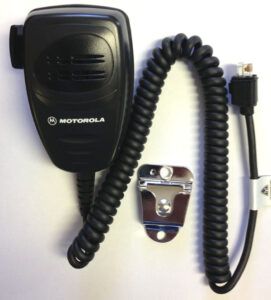
User-interface items on any type of 2-way radio are the most common to fail. The hand mic on a Motorola mobile radio is no different. The coiled cord gets stretch repeatedly, the PTT button gets pressed numerous times a day, and in general the mic gets tossed around during the work day. This are all things which eventually fail.

If your radio is not transmitting one of the simplest forms of troubleshooting is to try a known good mic on the radio. If this doesn’t solve the problem, the next step is to check your antenna connections, and your antenna itself. Either one of these items can cause lack of transmit. Note: Antennas can become loose, coax can get pinched, the rear connection on the radio can become loose. These are all common things.

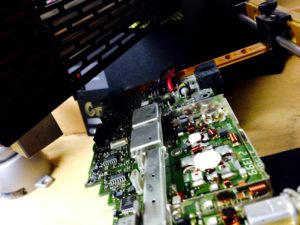
2-way radio boardIf you don’t find the problem in the hand mic or antenna, you may have a radio in need of repair. The Delmmar radio repair center can look at your mobile radio and determine if it is in need of repair. There is a flat rate fee for nearly all models of mobile radios. Send your hand mic along with the radio and it will be tested also. Radio repair is typically less than 1/2 the cost of a new radio.

Hand mics for the most part are non-repairable, but replacement mics are usually reasonable in price.

If you have questions give us a call here at Delmmar Communications, 800-872-2627. We are always happy to help.

erase the grime

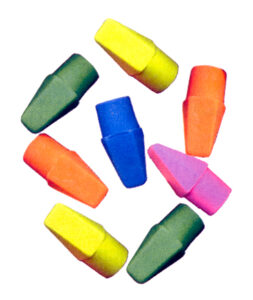
Pencil ErasersYou want to help keep your 2-way radio working problem free and possibly out of the radio repair center?

ONE SIMPLE TRICK:

Clean your battery contacts on the radio, battery and charger, with a pencil eraser. This will clean off the day-to-day grime and film, allowing your battery to make better contact with the radio and charger.  Try this simple tip, and enjoy a fully charged battery. This may just add months of time to the life of your battery.

Refrain from using any solvents or cleaners which may damage your battery contacts.

If you have questions give us a call here at Delmmar Communications, 800-872-2627. We are always happy to help.