heavy radio use

It’s that time of year when radios are going to be put into heavy use

Many businesses are now in their busiest season, while others are just gearing up, 2-way radios are getting heavy use. Now is a good time to assess what you have, checking over your radios, batteries, chargers, etc.

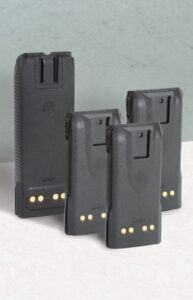
Do you have radios that are in need of battery replacement Motorola Impres Batteriesor maintenance? A quick check of the battery and charging system can save many headaches done the road. You probably don’t need reminded, but something as simple as cleaning your battery contacts with a pencil eraser can improve your chargers’ efficiency.
TIPS:

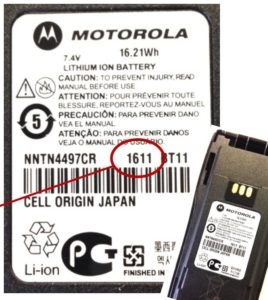
Swapping a known-good battery into a troubled radio can let you know if you have a battery or charging problem. Another piece of advice is to check your battery date codes.  The life expectancy of a NiCd battery is 18-24 months, NiMH and Li-Ion are around 14-18 months. If you have good charging habits and treat your battery well, you may get up to 3 years. At the end of the battery’s life you will start to experience problems with the radio such as static, short business day, no or intermittent transmit. If you use an old battery long enough, it will eventually begin to harm the radio, resulting in a need for repair. Simply replacing an old battery would be about half the cost of a radio repair. Our advice… don’t ignore battery date codes.Motorola battery date code
Chargers take their share of punishment. It is wise to assess your chargers when you are check your batteries. Look in the charger cup, do you see dirt and debris? If so, clean it out with a soft cloth, followed by gently cleaning the charge contacts with a pencil eraser. Check your wall transformer, they are known to burnout much a like a light bulb. When replacing charger transformers keep in mind they are not mix-n-match, you must use the appropriate transformer for the charging tray. Replacement chargers and individual components are usually available for most radio models.

Ever think your radios’ range is getting poorer? Check your antenna. If you can see copper coils when you bend the antenna, or if the top cap is missing, you need to replace the antenna. Use the correct antenna for the radio. The original antenna which came with the radio was designed to work with the radio. Swapping antennas can cause range problems, or result in the need for repair. Some model radios have stubby antennas available, keep in mind these can reduce your range by up to 2/3s. If most of your work is nearby, they may be a good option. However, if you do a lot of work at the edge of your full range, stay away from stubby antennas.

In the event, none of these tips seem to alleviate your radio issues, your radio may be in need of the radio repair center. We have a radio repair form that is easy to fill out. Just put it the box with the radio and we will get the unit repaired and back home to you. We offer a 5-7 day turnaround on most models.

If you have questions give us a call here at Delmmar Communications, 800-872-2627. We are always happy to help.
 

more tips on better range

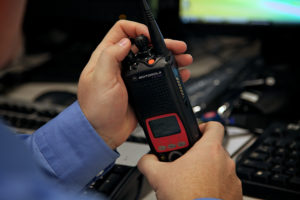
2-Way Radio CustomerHere at the radio repair center we get many questions about radio range (talk distance). Typically a handheld business radio will do 2 miles line-of-sight or as far as the radio can see. Several factors interfere with range, including but not limited to: curvature of the Earth, obstacles, height and placement of antenna, position of the radio, and using the correct antenna for the radio.
Range tips:

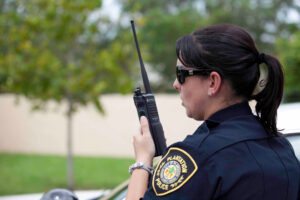
  • 1) Holding the radio upright with the antenna straight up gives you the best range. Tilting to the side, as if talking on the phone, will reduce the range by up to 2/3s. This will cause transmissions to drop out, or be very staticky. Just remember: Perpendicular to the ground is best!
  • 2) The body fluid of the person wearing the radio can absorb part of the range.  If you’re a little bit round in the middle, your radio will not work as well as your pencil-thin co-worker. You can compensate by wearing the radio higher your body. Maybe in a shirt pocket or with a chest pouch. Height and placement of antenna determines range.
  • 3) Use a good quality fully charged battery. It takes more energy to transmit than to receive. Using a good battery will do wonders to clear up static, making your transmissions clear.
  • 4) Use the appropriate antenna for your radio. While stubby (short) antennas may be available for your radio model, keep in mind these will significantly reduce range. If you are working in a close proximity, they may work wonderfully. However, if you are expecting to transmit a long distance, go back to the original standard length antenna.
  • 5) Check your antenna for damage. If you can bend the antenna and see the coils or if the top cap is gone, it is time to replace the antenna. This may do wonders for your range.
  • 6) Get your radio tuned up. Electronic components inside your radio age over time and the radio will not function as well as it did new. Getting your radio tuned and realigned will bring it back to factory spec, or as close as one can get with an older radio.

If you have questions about increasing range, give us a call here at Delmmar Communications, 800-872-2627. We are always happy to help.

radio range

Radio Repair CenterHere at the radio repair center we occasionally get questions about the range of a 2-way radio. Below are some simple answers to basic two-way radio range questions:

Portable radios generally will talk radio-to-radio, line-of-sight up to 2 miles. Once you start putting obstacles between the radios you will shorten your range. Even the body fluid of the person wearing the radio on their hip will absorb some of the range. Higher wattage radios will have a slight increase in range and a significant increase in clarity of transmission on the outer fringes of your range.

Mobile radios, such as those mounted in vehicles, will generally talk “radio-to-radio” 8-10 miles depending upon the obstacles and the terrain.

Base stations will generally talk approx. 8-12 miles. (referencing a simple base station where you use a mobile radio, power supply and outside antenna, aka a control station.)Contrary to popular belief wattage does not determine distance. Antenna height and placement determines distance.

  • Increasing Range:
  • 1) Hold your radio perpendicular to the ground, not slanted like you would hold a phone. This problem alone could decrease your range 30-50%.
  • 2) Don’t shout CB-style, shouting reduces talk-range on industrial-type radios.
  • 3) Be certain you are using a good, fully-charged battery.
  • 4) Check your antenna. Any exposed copper coil or weather checks which expose the coil when bending are a sign your antenna needs replaced. Also, keep in mind, use of a stubby antenna will reduce your range. The best antenna for a radio is generally the standard antenna it came with.
  • 5) And the technicians in the shop will tell you… have your radios serviced every two-three years to maintain peak performance.

Looking for even more range?

You might be in the market for a repeater, or have need to connect with a local repeater or trunking system which is already in place. But first, try bringing your radios to optimum range by following the above tips.

If you have more questions about increasing range give us a call here at Delmmar Communications, 800-872-2627. We are always happy to help.